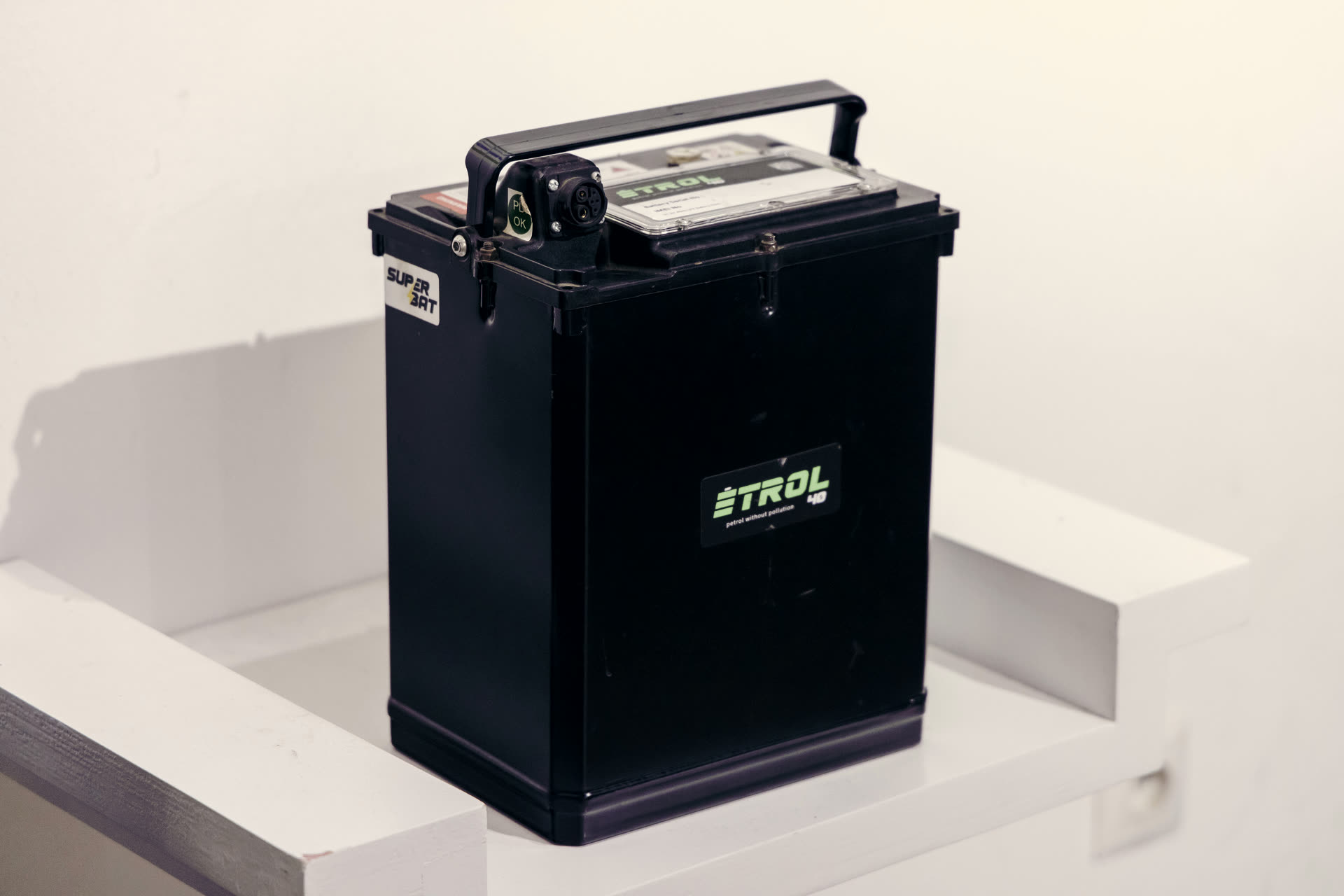
The battery is the most expensive part of an electric motorcycle and the one most affected by how you treat it. It doesn’t fail all at once: it ages faster or slower depending on a handful of simple habits.
How it works
A lithium-ion battery moves ions between two electrodes on every charge and discharge cycle. That’s what gives it its energy density, its low weight and its long life. Three things decide how quickly it ages: charging habits, temperature and storage conditions.
Seven habits that make it last
Don’t run it flat. Recharge before it drops below 20 %. Partial charges do no harm — unlike older battery chemistries.
Don’t always charge to 100 %. Held between 20 and 80 %, a lithium-ion battery ages noticeably more slowly. Save the full charge for the days you genuinely need it.
Avoid temperature extremes. The sweet spot is 20–25 °C. Above 35 °C, degradation accelerates. In Dakar that means something concrete: never leave the battery charging in direct sun, and let it cool after a long ride before plugging it in.
Store it half full. If the bike sits for several weeks, leave the battery at around 50 % in a cool, dry place.
Run a full cycle occasionally. If a battery goes unused for months, do a complete cycle every 6 to 12 months: charge to 100 %, discharge, then bring it back to 50 % for storage.
Use the manufacturer’s charger. An uncertified charger can cause overcharging, overheating or internal damage. On Mobelec bikes, the IoT system flags unauthorised chargers and batteries.
Don’t leave it plugged in overnight. Unplug once the charge is done.
Warning signs — stop immediately
Stop using a battery that:
- swells or deforms;
- runs abnormally hot in use or on charge;
- gives off an unusual smell or leaks.
In any of those three cases, take it to a technician. Do not try to open it.
Two safety rules
A used battery never goes in the household bin — it goes to a proper collection point. And a battery that has taken an impact or a puncture can short internally: handle it carefully and carry it flat.
Or don’t think about it at all
That’s exactly the point of battery swapping: you ride, you trade the empty pack for a full one at a station, and looking after the fleet of batteries is our problem, not yours.